Doedicurus

images-1 images

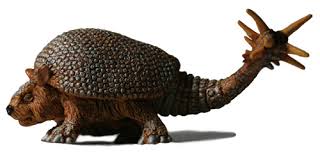
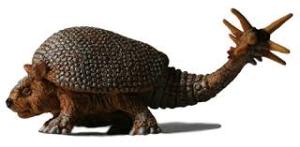
Doedicurus is a extinct armadillo that had four short legs, powerful jaws,

with no teeth in the front and grinding teeth farther back in the jaws.

Doedicurus was about 4m in length, and was 1.5m tall.

Its worst enemies were saber-toothed cats and borhyaenids.

Doedicurus had a long tail with a club on the end like ankylosaurus.

Here is a tribute to the giant armadillo of the ice age.
Baluchitherium

fc039622208a139543362f8dc989c852images

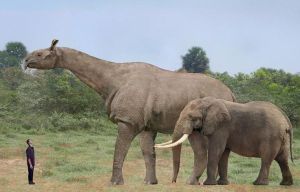
Indricotherium is a large, extinct, hornless rhinoceros.

Adults were 18 feet tall, and weighed up to 18 tons.

It had four teeth; two tusk-like front teeth in the top jaw,

pointing down and two on the bottom pointing forwards.

This herbivore ate leaves and twigs from the tops of trees.

This spectacular creature had three toes on each foot.

They are also known as Indricotherium or Paraceratherium.

Here is a vid. about Baluchitherium!

Woolly Rhino


imgres-3imgres-2

The Woolly Rhino is a species of extinct Rhino that lived in the ice age and lived in Europe and Northern Asia

Adults would be about 3 to 3.8metres long and a weight of 2721 to 3175kg, and could grow up to two metres tall.

Their horns must had been used to dig up plants to eat or for defence.

Woolly Rhinos must have been extinct because of hunting or climate change at the end of the ice age.

Here is a video about Woolly Rhinos.

Short-Faced bear


Unknownimages-8

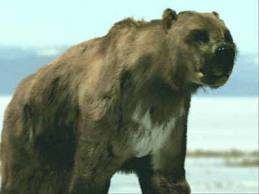
The short-faced bear was an extinct animal that lived in North America, mainly in California.

The short-faced bear was the largest bear that lived on earth.

It was 2 or 3 times bigger than the Grizzly Bear.

The short-faced bear first appeared about 800,000 years ago and became extinct about 11,600 years ago.

It could be 11 to 12 feet tall on its hind legs and could be 5 to 6 feet high from foot to shoulder when it was on all 4 legs.

An adult short-faced bear needed about 16kg of meat per day for it to survive.

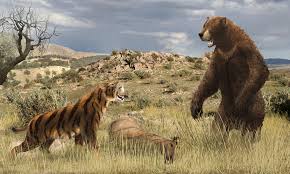
The short faced bear’s long legs made it run swiftly, so the short faced bear could hunt down prey such as a wild horse easily.

Here is a video showing a short-faced bear hunting a Ground Sloth.


Brontotherium or Megacerops

Unknown images-8

Brontotherium is an extinct animal that is more related to horses and tapirs than rhinos.

They were 2 times bigger than the modern rhino, 16 feet tall and could weigh up to 2 tonnes.

They lived in North America 30 to 38 million years ago.

The word brontotherium means “thunder beast” in greek.

On their snout there was a pair of horns made of bone and they had a hard skull to protect the brain while fighting for a mate.

To lift the heavy skull they had an extra long dorsal vertebrae.

They were very protective of their newborn.

Brontotherium had been given a new name. The name is Megacerops meaning “giant horned face”.


Mastodon

images-6images-7

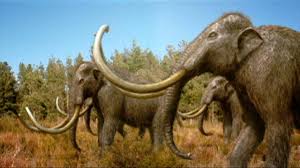
Mastodon is an extinct mammal related to elephants.

They lived in Central and North America.

They became extinct 10,000 to 11,000 years ago due to hunting by humans and predators.

Mastodons are estimated to be 2 to 3 metres tall, their bodies 5 metres long and their bodies 4 to 5 tonnes.

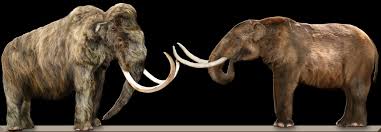
In the picture below, on the left is a mastodon and on the right is a woolly mammoth.

Obviously the mastodon is bigger and stronger than the woolly mammoth.

images-5